


The powerful earthquakes that struck Venezuela have caused severe consequences, with at least 164 people confirmed dead, 971 injured and thousands more reported missing.
Authorities and emergency teams are continuing search and rescue operations, while the extent of the damage continues to be assessed.
Two strong tremors struck northern Venezuela overnight. The first earthquake had a magnitude of 7.2, while the second reached 7.5, causing extensive damage in residential areas.
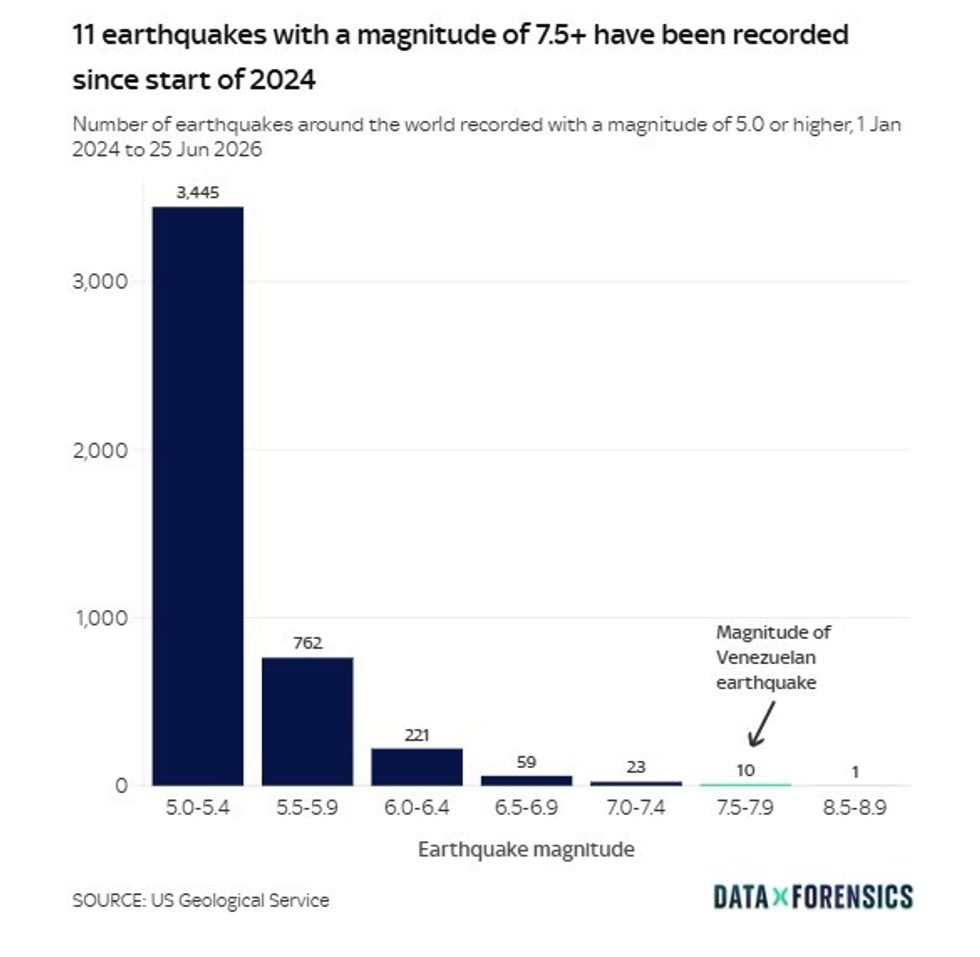
Experts explain that such earthquakes, although rare, are not extraordinary. Tremors with a magnitude of 7.0 to 7.9 can cause serious damage in cities, while those above 8.0 can destroy entire urban areas.
According to data from the US Geological Survey, 11 earthquakes with a magnitude of over 7.5 have been recorded worldwide since 2024. However, not all of them have caused consequences comparable to those in Venezuela, writes skynews.
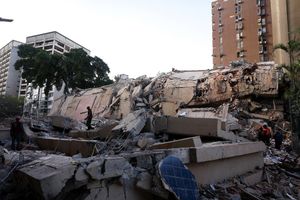
One of the main reasons for the high number of victims is related to the location of the earthquakes. The tremors hit the most populated areas of the country, including the capital Caracas, home to more than two million people, as well as the coastal state of La Guaira, with about 380,000 inhabitants.
Direct strikes on urban areas have increased damage not only to buildings, but also to public infrastructure, including roads and bridges.
In other cases, even more powerful earthquakes have caused fewer consequences because they occurred in uninhabited areas. An 8.8-magnitude quake that struck Russia’s Kamchatka Peninsula last year was among the most powerful ever recorded, but caused no direct casualties.
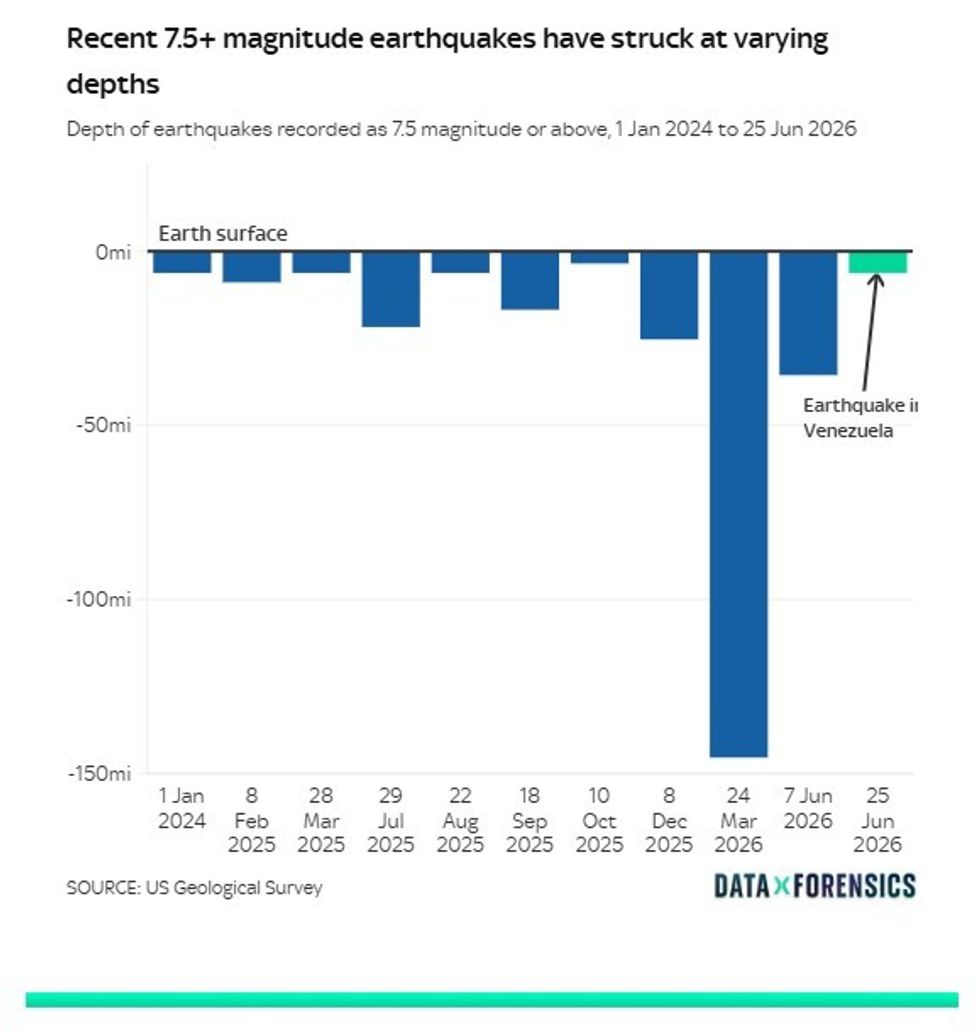
Another factor contributing to the devastation in Venezuela was the shallow depth of the tremors. The second quake occurred only about 10 kilometers below the Earth’s surface, making its energy felt more strongly at the surface.
Experts emphasize that the combination of high magnitude, proximity to residential areas, and shallow depth has turned this event into one of the most severe seismic disasters in recent years in the region. /Telegraph/