
The United States has sent Polish authorities several intelligence warnings, according to which Russia is suspected of preparing an armed provocation on Polish territory in the coming months, with the aim of testing NATO’s resolve and exerting pressure on the West to cut off military aid to Ukraine.
According to sources close to Polish President Karol Nawrocki, American intelligence services have delivered information to Warsaw about possible Russian plans that could cause a limited security crisis on NATO’s eastern flank.
Intelligence assessments suggest that Moscow aims to test the Alliance’s readiness to respond to a limited incident, while simultaneously increasing geopolitical tensions and putting pressure on Western allies to halt military and logistical support for Ukraine.
The security services of Poland and the Baltic countries have reportedly identified several scenarios that are being considered by the Russian side.
Among them are simulated air strikes to activate Polish air defense systems, as well as drone or missile attacks on critical infrastructure, including energy facilities, the Independent reports.
The assessments also include the possibility of a hybrid ground incursion across NATO’s eastern border. In this scenario, Russian or Belarusian armed forces could cross the border from the direction of Belarus or the Russian enclave of Kaliningrad.
According to sources, Moscow may try to present such an incident as an unintentional error, claiming that it occurred due to a GPS system malfunction or during a rescue mission after a military helicopter crashed.
The sources add that the Russian leadership calculates that in such a situation Washington will push Poland towards negotiations, rather than responding with military force.
According to the same sources, the eventual withdrawal of Russian forces after a diplomatic agreement would be presented by Moscow as a strategic victory.
At the same time, Russia would demand the complete cessation of Western military and logistical aid to Ukraine as a condition for withdrawal.
Allied intelligence services reportedly confirm that such operational concepts are currently under consideration in Moscow. Analysts believe that a limited provocation is one of the few ways Russia can exert pressure on NATO, as the bulk of its conventional military capabilities are engaged in the war against Ukraine.
According to European security assessments, Moscow considers Poland a more suitable target for such an operation than the Baltic states, hoping to exploit existing disputes between Warsaw and Kiev over agricultural competition and historical issues.
In response to these assessed threats, NATO has in recent weeks intensified preventive activities on the Alliance’s eastern flank.
The recent naval exercise in Latvia, involving US sailors and marines, was intended to demonstrate that any attack on NATO’s eastern flank would mean the direct involvement of US forces.
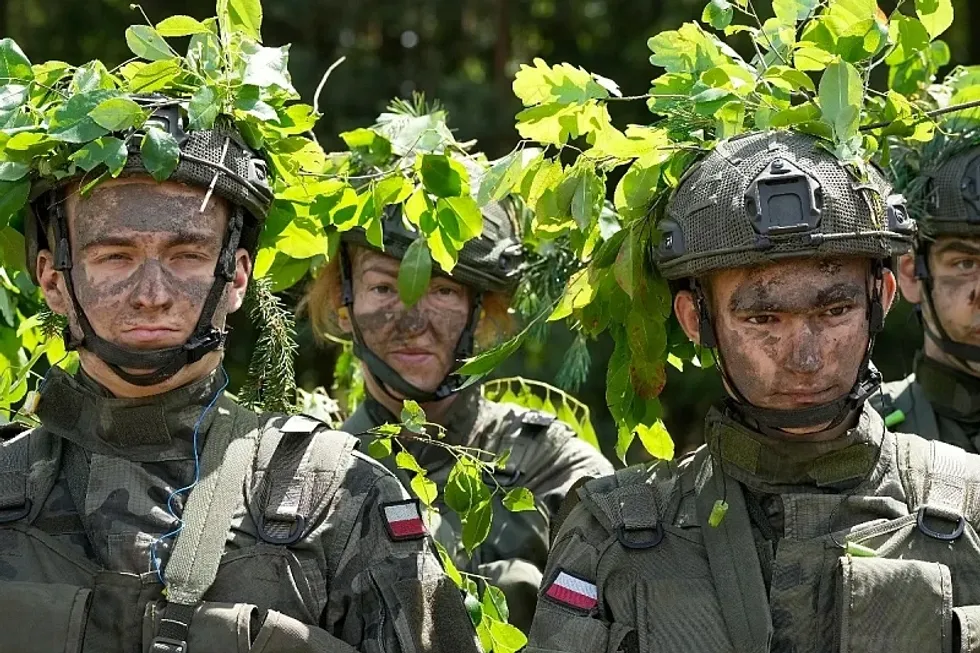
The Polish Ministry of Defense has confirmed that the armed forces have conducted special exercises to demonstrate readiness for a joint response in the event of a Russian aggression.
According to the report, NATO has also drawn up plans for a possible response to a Russian provocation. One of the options mentioned is striking the Russian enclave of Kaliningrad, while the German military leadership has previously stated that the Alliance will defend every inch of member countries’ territory.
The allegations about alleged Russian plans have so far not been officially commented on by either the Kremlin or NATO. /Telegraph/