

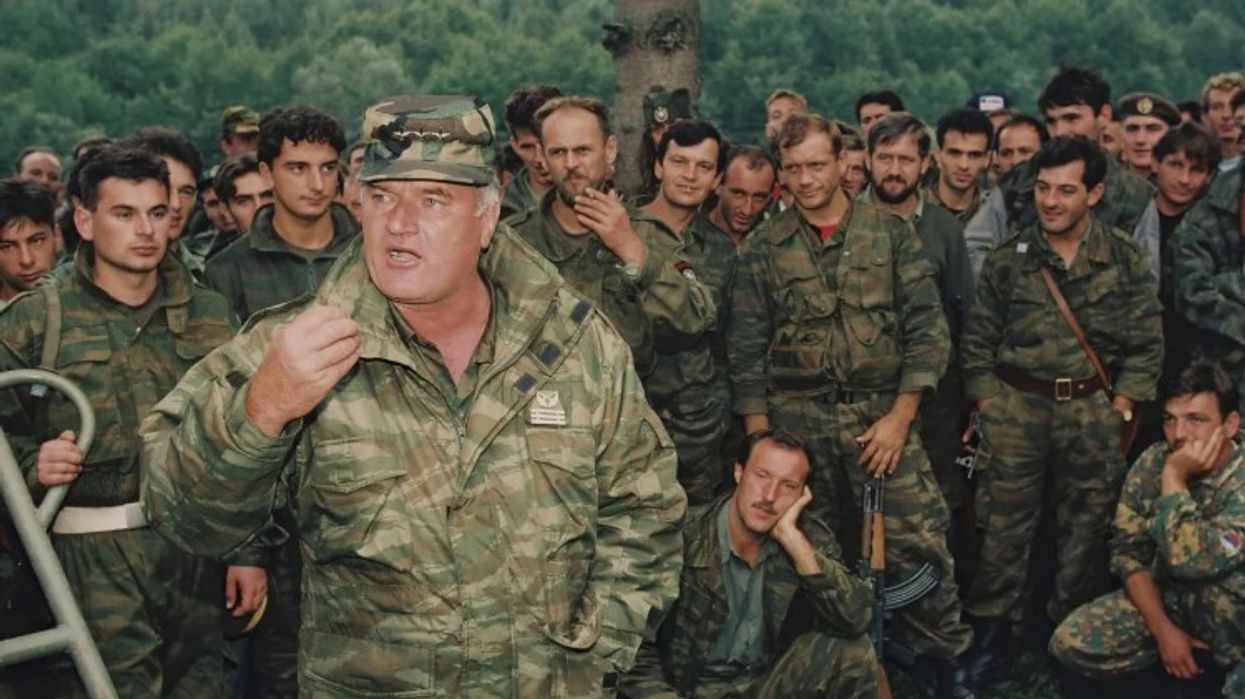
The death of war criminal Ratko Mladic and the reactions of part of the public opinion and politicians from Serbia and Republika Srpska have highlighted deep social problems, while the reaction of the official Serbian authorities is particularly striking, which can be presented as a chronology of political hypocrisy.
The story of Ratko Mladić’s cover-up is the story of how the Republic of Serbia hid the order-giver and perpetrator of some of the most serious crimes, including genocide, essentially trying to protect not only Mladić himself, but also the narratives that were to be created about the wars of the 1990s.
Also, from today’s perspective, the story of Mladic’s arrest looks more like the use of an “expensive currency” in an attempt to present Serbia as a state that sincerely wants to become a member of the European Union, than as a real goal of society to confront the past and go through a catharsis process, writes klix.ba.
The International Criminal Tribunal in The Hague issued an arrest warrant for Ratko Mladic in 1996. The then regime of Slobodan Milosevic had no intention of handing Mladic over, and the war criminal lived in Belgrade and Serbia as a free citizen. Mladic had protection from members of the Yugoslav Army, who guarded his apartment on Blagoja Parovića Street, in the Banovo Brdo neighborhood of Belgrade.

In 1996, Milorad Dodik, who is now the leader of the largest party in Republika Srpska, declared in an interview that Radovan Karadzic and Ratko Mladic should be sent to The Hague. His positions today are significantly different.
After the fall of Slobodan Milosevic, Mladic lived in Banovo Brdo until June 2001. Then, for about a year, he stayed in various military facilities across Serbia, from the barracks in Topcider to a military facility in Stragari.
Serbia signed a cooperation agreement with the Hague Tribunal in April 2002. After that, Mladic went into hiding in apartments rented for him by his network of supporters. According to the Tanjug agency, until 2006 he was mainly “hiding” in Novi Beograd, in apartments at several different addresses, as well as in the Bezhanijska Kosa and Banjica neighborhoods.
Until his arrest in 2011, Mladic spent most of his time in the village of Lazarevo, near Zrenjanin. He also had an identity card issued in the name of Milorad Komadic.
From these facts about the period when Mladic was one of the most wanted persons in the world, it is clear that even after the fall of Milosevic he had to be under some kind of protection, at least from parts of the security and intelligence system of the Republic of Serbia.
So, it took Serbia a full nine years from officially accepting the obligation to cooperate with the Hague Tribunal to arrest Mladic, while the war criminal was in close proximity to his relatives.
However, despite these facts, it is clear that the arrest of Mladić in Serbia required a certain dose of political courage, which was shown at the time by President Boris Tadic.
After the arrest, Tadic stated that Ratko Mladic had been arrested in the early hours of the morning in a coordinated action by the Information and Security Agency and the War Crimes Investigation Service. He said that this confirmed that Serbia was ending its cooperation with the Hague Tribunal and that Mladic would be extradited to the United Nations court.
Tadic also warned that the investigation into the people who helped hide Mladic and whether such structures existed within the state would continue. He said that all those who helped would be prosecuted.
Under Tadic’s leadership, the Serbian Parliament adopted a resolution on Srebrenica, in which Serbia recognized the crime in accordance with the decisions of the Hague Tribunal, essentially acknowledging the genocide committed.
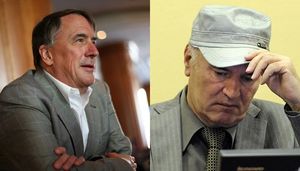
It is debatable whether Tadic was sincere and whether these actions were taken for opportunistic reasons. But the fact is that they were taken, and it is difficult to imagine the current Serbian government undertaking something similar.
Whether Serbian society would have dealt more successfully with the past if the forces that, at least in terms of narrative, acknowledged the crimes had remained in power remains a matter for discussion in the fields of sociology and political science.
The coming to power of the “reformed” radicals, in the form of the Serbian Progressive Party under the leadership of Aleksandar Vučić, dashed hopes for such a development.
The current government in Serbia, through statements by politicians and the media under its control, glorifies the role of war criminal Mladic and mythologizes him as a victim who was “murdered in The Hague.”
Serbian President Aleksandar Vučić has accused Europe of being uncivilized after the Residual Mechanism in The Hague, due to his health condition, did not release the war criminal sentenced to life imprisonment from prison earlier.
Justice Minister Nenad Vujic had announced that Mladic would be buried with full military honors, but Vucic later denied this. It is believed that, due to international pressure, Vucic will try to avoid a state funeral for Mladic.
The fact is that from the moment the arrest warrant was issued for Mladic until his death, Serbia’s political leaders were only for a short period willing to distance themselves, at least in terms of narrative, from Mladic and the legacy of his crimes.
Today’s Serbia not only does not distance itself from war criminals, but accepts them with open arms and includes them in its contemporary mythology. /Telegraph/